by Osman Hassan
Thursday, April 16, 2020
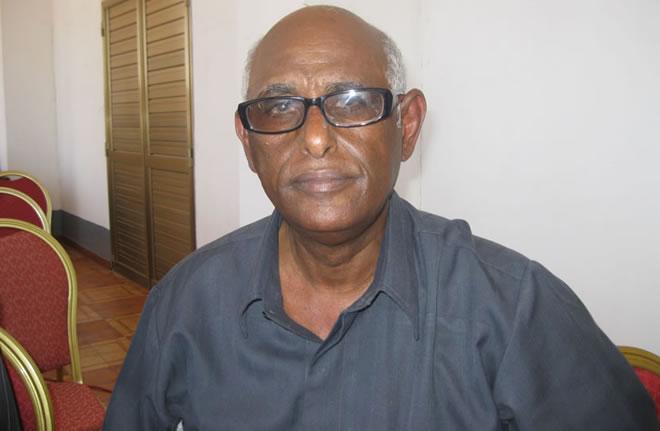
The honourable Mohamed Abdi Yusuf, a former Prime Minister of Somalia, is a man distinguished by his probity and patriotism -rare qualities among Somalia’s contemporary corrupt political class. When political expediency dictates others to remain silent on the secession, Mohamed Abdi Yusuf by contrast has no qualms to speak for the nation, all the more as befits a former Prime Minister. He was therefore true to himself when the other day he gave a rare interview. Outspoken and forthright as usual, he stated among other things the inviolability of the union, the treachery of the former SNM rebels against the Somali State and the inadmissibility of the secession. This narrative, shared by millions of Somalis, is nonetheless heresy in the eyes of diehard secessionists and as expected he was orally lynched for crossing their redlines..
But what is galling about the uproar generated by Mohamed Abdi Yusuf’s interview is not so much it came from Hargeisa as that was predictable but from Mogadishu of all places, the capital of the country, and from parliamentarians, the presumed defenders of the union. And to be precise, they were none other than the separatist enclave’s representatives in the federal parliament. On occasions like this, when they feel the enclave is under fire from its external enemies, they gang up together, show their true colours as “Somalilanders” and pledge solidarity with their true motherland. Far from rallying to the defence of the former PM, or otherwise remaining silent, they instead denounced him and defended Somaliland as if was a sovereign country whose internal affairs are out of bounds for outsiders. Even Marwo Fowzia Yusuf Haji Adan waded into the furore to have the last word and lambasted him, not missing to mock his old age as if that was a blemish and not a blessing.
Hargeisa might shame them in public as turncoats who defected to Mogadishu but in private appreciates them as the enclave’s formidable caucus who utilise their voting clout to deter challenges from Mogadishu. Incurring Hargeisa’s displeasure has political costs just as indulging it has its rewards. Wily former president Hassan Sheikh Mohamoud courts them shrewdly as when he awarded them equal status with Somalia at the talks. It is an investment and the political dividends are awaited when the time comes. Farmaajo too is mindful of the stakes and that might explains why he did nothing to deal with the secession for all the time he has been in office. For Hargeisa, inaction against the secession is as good as giving them a pat on the back and that too could have its rewards. As such, discretion not to run Hargeisa’s gauntlet is the conventional wisdom among Somali leaders in power or aspiring to it in Mogadishu
Somaliland’s colonial genesis
For a start, the name Somaliland is a common appellation applied historically to all the lands inhabited by Somalis in the Horn of Africa. What existed then were not specific territories or countries as the secessionists would claim but disparate borderless tribal settlements, identifiable by their clan name. It is against this background Britain acquired its portion of the Somali homeland not through military conquest but simple consent. It cleverly played on the hostility among perennially warring clans and offered each protection from its neighbouring foe.
Thus, between 1884 and 1886, all the clans except one signed such protection treaties with Britain .The land was her Majesty’s territory - not its Somali people who were merely her subjects, a slightly dignified status than slaves. Such colonial paradigm of possession, divide and rule and the maintenance of perpetual distrust among the clans ensured the absence of national consciousness and aspirations until close to independence. So much for Somaliland’s colonial past. These realities totally negate the secessionist claims that they used to be a separate country or nation. There was none before the birth of Somalia.
The advent of nationalism and Independence in British Somaliland
The first time there was a struggle against British presence in its Somali territory (and the last until shortly before independence) came with the birth of the Darwish liberation movement in 1899 under the leadership of Sayid Mohamed Abdullah Hassan which was finally defeated in 1920. The advent of Somali nationalism in Italian Somaliland after the Second World War under the guidance of S.Y.L, and the designation of the territory as UN Trusteeship to gain independence within ten years is what finally spawned similar Somali nationalism in the British colony.
In December 1959, the General Assembly of the United Nations adopted a resolution that Italian Somaliland should become independent on 1ST July 1960. This action sparked similar demand by all the clans in British Somaliland for independence, not for its own sake but in order to unite immediately with Italian Somaliland on its date of independence. That demand was channelled through their respective political parties and elected members in the Protectorate’s legislative council. Accordingly, on 6th April 1960, the Council unanimously adopted the following resolution:
“That it is the opinion of this House that practical steps should be taken forthwith for the immediate unification of the Protectorate and Somalia, That prompt action is essential to achieve this most cherished aim, and can be fully justified by the special importance which popular support in the country attaches to its early achievement, That the day of independence and unification with Somalia must be 1st July 1960, the date which Somalia will attain its full freedom”. (see Report of the Somaliland Protectorate Constitutional Conference held in London May 1960)
Following the adoption of this Motion, Mr Mohamed Ibrahim Egal, as leader of the Legislative Council led a delegation to London in May 1960 to seek the requested independence from the U.K. government in order to unite with Italian Somaliland. That demand was granted and so Somaliland Protectorate became independent on 26 June and united with Italian Somaliland on 1st July1960 in accordance with the resolution of the Legislative Council and in line with the wish of all the clans. No clan took others to this union as that was a collective decision. Similarly, no one clan can take others from the union other than force as happened.
The facts about the independence and union
The secessionists have falsified the truth about the history of British Somaliland, the facts about its independence and the union. It is therefore necessary to restate the facts:
· That, as the Report of the Somaliland Protectorate Constitutional Conference held in London May 1960 attests, the clans of British Somaliland collectively decided in April 1960, well before independence, to unite with Italian Somaliland and not after independence as secessionists falsely claim;
· That the independence sought from Britain was not an end itself but a means to an end – and solely to unite with Italian Somaliland;
· That Somaliland’s four days independence was merely a wok in progress meant to lead to the union of 1st July 1960;
· That, contrary to the secessionists’ claims, no country bothered to recognize a country that would only remain independent for only 4 days;
· That, as former PM Mohamed Abdi Yusuf asserted in his interview, the union of 1st July 1960 was not one between two separate sovereign nations with separate laws, constitutions and flags, but between independent Somali people, sharing one flag and one aspiration to unite, irrespective of their geographical location in those territories;
· That all the clans joined the union unconditionally with no option for secession;
· That the declaration of secession from Somalia in May 1991 was by one clan in the north west region of Somalia and not one shared by other northern clans who remain committed to the unity of Somalia even if occupied by the secessionist enclave;
Farmaajo’s Misplaced Apology
President Farmaajo recently apologized to the people in the “north” (the word he used) for what he said were the wrongs done to them in the past. He did not specify what those wrongs were. For Hargeisa, they are what it calls the destruction of their city, the genocide (Xasuuq) of their people, of whom close to 50,000 civilians they claim were killed, and related crimes against humanity - all committed they allege by Somalia’s forces, both land and air.
Farmaajo’s apology to the “North” may sooth the secessionists but it is repugnant to the rest of the northern people- the unionists in Awdal and the SSC regions. No apology is due to them because they happen to be northerners. Their military men, many of whom died in the line of duty, did nothing wrong but sacrifice their lives to defend the country from foreign conspired dismemberment. That might also go for other Somalis from all the regions of Somalia whose people, both military and civilian, also died during the fighting. If specific instances of wrong-doings took place, which are inevitable in all wars, those should have been investigated separately without inculpating the whole Somali army in the north en masse.
For his part, the former Prime Minister, Mohamed Abdi Yusuf, does not go along with Farmaajo’s apology. Echoing what most Somalis hold, he has presented in his interview a different narrative: He does not pull his punches and puts all the blame for what happened in Hargeisa and elsewhere squarely on the shoulders of the SNM rebels: that it was them who indisputably attacked Hargeisa and Burco with Ethiopia’s backing, fully knowing that the Somali military forces based in these towns would not stand by idly or run away but defend the unity and sovereignty of the country as is their sworn duty; that the SNM insurgents were aware of the destruction and death their attack will bring on the city and its civilian population, and therefore are responsible for these consequences;
The former PM also holds the SNM not only being responsible for destruction and death its attack wrought on Hargeisa but also for committing massacres, or crimes against humanity, against refugees in Hargeisa hailing from the Ogaden Region of Ethiopia, as they also did in Borama, Hudun, and in Kalshaale. This alternative perspective has incensed Hargeisa and set them on its messenger. Only they, the perceived victims, are the sole judge and jury of what happened and outside dissenters are meted unforgiving opprobrium. It takes an undaunted man to dare challenge their version of history and Mohamed Abdi Yusuf is one.
Just as Hargeisa has a replica of a plane mounted high up on a pedestal as a symbol not to forget or forgive the past, Buuhoodle too has a raised APC likeness to remember the massacres Hargeisa committed at Kalshaale. The message to Hargeisa from these two respective actions is clear: Self-Righteousness and victimhood cannot be the monopoly of one side. But whereas for Buuhoodle, remembering the victims of Kalshaale has no other agenda, for Hargeisa, self-pity, blind bitterness and animus towards the South, Mogadishu and the Union are used as political tools to seek redress and retribution.
What is needed is Truth Commission
And when it comes to what happened in the past, there is no recourse to independent credible source. All the same, independent observers consider the figure of 50,000 civilian deaths claimed by Hargeisa, representing around a third or at least a quarter of the city’s population at the time, as self-serving and grossly overblown. It has also to be born in mind that humanitarian and human rights organizations as well as the foreign media would have acted in one way or another if a massacre of that scale were committed by the Somali army at the time, And yet, they did not act which speaks for itself.
The question which arises is why Hargeisa failed to invite these organizations to investigate and report on these alleged crimes? If it did that, and they were to confirm its claims, that would have boosted its cause. As it is, Hargeisa has been averse to call on these organizations. This failure has led outsiders to conclude that these figures are concocted and maintained to cynically justify the secession and ensuring that the generations born since its declaration are still beholden to it.
What Farmaajo should have done (and still do now), instead of his ill-considered apology was to call for an independent inquiry, preferably under the auspices of the United Nations, to investigate all alleged massacres and human rights crimes that took place in Somalia (north and south) since the 1980s. Notwithstanding the passage of time, the basic facts could still be established. This will not happen, for one thing because Colonel Muse Bihi and company could find themselves in the dock. For another, they prefer maintaining their genocide claim and milk it forever. Without it, people like Faisal Ali Waraabe would not function unless they daily recite their Xasuuq mantra
Talks that are tantamount to treason
The talks between Mogadishu and Hargeisa are referred to officially as “Somalia/Somaliland” talks as if they were two different countries. The name “Somaliland” has been defunct since the former two ex- Somalilands united on 1st July 1960. In May 1991, the SNM declared that they revived Somaliland and seceded from Somalia. In accepting the name Somaliland for its counterparts, the federal would be, implicitly or explicitly, endorsing the SNM declaration that Somaliland had been revived. That would amount to recognising the return to the pre-union situation and hence a breakup of Somalia. That would be treasonable.
Secondly, in recognizing its interlocutor as “Somaliland” without qualifications, the federal government has also implicitly conceded that all the regions in the north (former British Somaliland) are part of Somaliland’s domain irrespective of the fact the unionist regions are no part of the secession and consider themselves as part of Somalia. That would render the federal government complicit not only in the breakup of Somalia but also in trembling over the inalienable rights of the unionist regions to be part of Somalia and not sacrificed to the secessionist aspirations. The onus therefore is on the federal government to prove otherwise.
There is an alternative to the talks if the federal government is serious about ending the secession. All it has to do is provide political and material support to the unionist SSC regions to liberate themselves from the secessionist occupation. Deprived of the claim and control of these regions, the one-clan leftover would be unsustainable. That reality check will force them to give up the secession and take their place in federal Somalia, equal to all others but no preferential treatment. Unfortunately, this is something Farmaajo has not done before and unlikely to do so now, preoccupied as he is with his re-election and fishing for votes.
Military Action
Honourable Mohamed Yusuf Abdi does not hold much store for these talks. For him, there is only one course open to Somalia and that is the military option. This has created an outcry in Hargeisa and among its supporters everywhere. But what the former PM is calling for is not something out of the ordinary. That is what other African countries facing secessions did – as Congo ended the secession of Katanga by force after independence and Nigeria did the same in Biafra in the 1960s. So, why not Somalia as the former PM called for? The problem is that the Villa Somalia that cannot defend itself against Al Shabaab even in Mogadishu cannot militarily liberate the occupied northern unionist regions let along recapture Hargeisa.
If there is one observation this writer can say about the former Prime Minister, and with all due respect, it is that he still lives in the past- in the good old days of the “Kacaan”. Unfortunately for him, the Federal Government of Somalia of today is no Somali Democratic Republic of the past, and Farmaajo is certainly no Siyad Barre. He has to live for that saviour for another day.
Osman Hassan
Osman [email protected]