by Muuse Yuusuf
Saturday, December 24, 2016
In a nation’s life there are crucial historical times when its socio-economic and political history is made or broken. The
The Republic was politically stable and secure. The military regime, which had deposed the last democratically elected civilian government on 21 October 1969, was popular and the public was behind it. Its “scientific socialism” ideology and socio-economic developmental projects were making headways.
It had completed an impressive mass literacy campaign (1974-75), and for the first time had successfully introduced the Somali language script officially. It had also managed successfully the 1974-75 droughts, the worst in Somalia’s modern history, which meant the resettlement of thousands of people that were affected by the drought and creating a new life for them..
The proud Republic was militarily strong. Supplied by the former Union of Soviet Socialist Republics (USSR),
On the other hand, unlike
After its defeat in
The military junta deposed Emperor H. Selassie on 12 September 1974. This date, declared as the revolution day, marked the end of
By 1975, as disorder increased in
A newly revived Somali resistance movement called Western Somali Liberation Front (WSLF), committed to the liberation and unification of the Ogaden region with the Republic, completed its re-organisational and structural process in
The proud Republic, feeling superior and stronger than
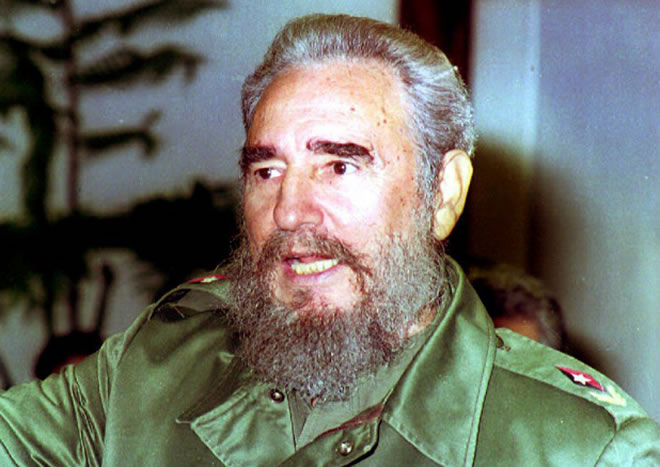
It was at this critical historical juncture that the late president Fidel Castro of
However, the initiative failed after the two socialist countries had rejected the plan. Brotherhood in socialism could not stand in the way of fervent Somali nationalism determined to realizing the Greater Somalia dream and
In a transcript of a meeting between Castro and East German leader Erich Honecker on 3 April 1977, in which the Cuban leader was briefing the German leader about his mediation efforts, Castro made clear how the Somali leader’s strong nationalist views and his “chauvinistic” attitude were obstacles to the talks. He also revealed his preference of the Ethiopian revolution and Mengistu’s socialist credentials over the Somali leader and his revolution, which he saw as being hijacked by imperialist forces. Indeed, in the meeting, he did not hide his willingness to support
“…..In order to find the best solution we must think through this question calmly and thoroughly and consider it in terms of the overall situation of the socialist camp. Above all we must do something for Mengistu. Already we are collecting old weapons in
After the failure of the above mediation and other peace initiatives, by the summer of 1977, the conflict reached its peak, and the looming war was unstoppable. Strength of
Once the battle was underway, Somali forces’ performance was remarkable. By 25 July 1977, they captured Godey followed by the immediate fall of major towns and other areas, such as Shilaabo, Qalaafe, Qabridaharre, Wardheer, Aware, Dhagaxbur, and Dhagaxmadow, Jigjiga and Dirir Dawe to the Somali forces. By mid-September, the Ethiopian regime conceded that 90% of the Ogaden region had fallen to the Somali forces. The talk in the town was the imminent fall of the historical town of
As towns and villages were liberated, celebrations broke out in the Ogaden region and across the Republic. Combined with the independence of Djibouti from France, Somali nationalism reached its peak at this point in time as people believed that Ogaden, another occupied territory, had been liberated. Helped by the script of the Somali language, and led by the mass media, this oral society expressed strong nationalist views in poems and songs in all corners of the nation.
This first phase of the conflict ended in favor of the proud Republic, which had nearly brought down the Ethiopian empire, a historical enemy, to its knees. However, Somali victory proved premature and short-lived because of the intervention of some powerful foreign powers in the war, a conflict that was already a classic example of Cold War superpower rivalry in the Horn of Africa.
The former USSR, having let down the proud Republic in its time of need and having sided with Ethiopia, triggered off the second phase of the conflict by undertaking the largest shipment of military equipment and men in Africa. This included shifting 225 planes (12% of the entire Soviet fleet), 1,500 Soviet advisors, and 10,000 Cuban troops and Yemeni forces, and the mobilisation of the public in
Even though he was already involved in the Ethio-Somali conflict, it was during the second phase of the conflict that the role of Fidel Castro as the man who frustrated dreams of Somali nationalists became clear.
It is true the conflict was driven by an international coalition of socialist states. However,
The Ogaden conflict was the only time that Cubans and Soviets had ever agreed on and conducted a joint military operation, as confirmed by President Fidel Castro in an interview 30 years after the end of the conflict. Explaining the USSR-Cuban military adventure, the Cuban president said: “It was the only operation we conducted in full agreement with the Soviets. No such cooperation took place even in
In the second phase of the conflict, Somalia suffered heavy casualties. 8,000 armed personnel, one third of its pre-war army, killed; three quarters of its tank force and nearly half of its aircraft destroyed. It took less than a month for the alliance to eject Somali forces from territories they had captured. Unfortunately, the Somali forces were no match for the huge multinational force, and within a few weeks of the fighting, major cities had fallen to the allies.
The conflict ended after the Somali government announced on 9 March 1978 of the withdrawal of its regular forces from the Ogaden region.
Even though the Somali National Army was defeated, it has to be noted here that this was not by Ethiopian or even African forces but by the might of a multinational force, which had cornered the proud Republic, forced it to capitulate, and in a way denied its long held dream of liberating the Ogaden region from Ethiopian hegemony.
Also, it must be said that the role played by the late Fidel Castro was one of the most decisive factors in the conflict because his country had the largest coalition forces on the ground and their crucial role in the battle ground is undisputed.
Indeed, even with the help of Soviets, Ethiopian forces could not have defeated Somalis in such a short period, as confirmed by Peter Chaplygin of the Soviet military mission in Ethiopia. Commenting on the role of the Cuban forces, he said: “The Cuban troops in Ethiopia played a very important role. The Ethiopians could not have provided the military organisation to destroy the Somalis in such a short period even with our help.
In conclusion, although USSR-led military intervention had saved Ethiopia from total disintegration and restored its national pride by ejecting Somali forces, it has, however, had negative impact on the proud Republic of Somalia. This is because the Republic had committed a large junk of its national resources on the Ogaden cause, and once that national adventure failed, Somalia’s national pride was humiliated by the defeat in the conflict-the biggest in the world at the time. Indeed, the Ogaden debacle was a turning point in Somali history because it unleashed socio-political forces and sequence of events that ultimately led to the collapse of the Somali state.
Muuse Yuusuf