
Monday, July 02, 2007
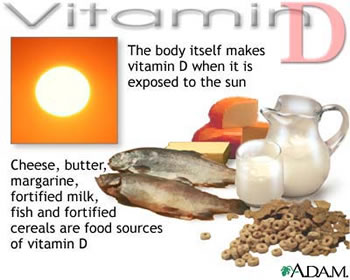 |
We get most of our vitamin D through sunlight acting on our skin, and only a little comes from the food we eat. Lack of vitamin D can cause rickets and chronic musculoskeletal pain. If deficiency is diagnosed as the main cause of this problem it is easily remedied through treatment with vitamin D, and it can be prevented by giving supplements.
advertisements
Dr Julie Mytton, from UWE explains, "Certain groups of patients are at increased risk of vitamin D deficiency due to older age, pregnancy, restricted diet, having dark skin or reduced exposure to sunlight. We have long known that the Asian community is at risk of vitamin D deficiency but with changing patterns of immigration to the UK we are now finding that other population groups are also at risk. In 2004 GP's from four neighbouring practices in north Bristol identified increasing numbers of patients presenting with chronic musculoskeletal symptoms. The practices are spread across a deprived area of the city housing the majority of the growing Somali community in Bristol. Two hundred and ninety nine patients with vitamin D deficiency were found to have been diagnosed at the four practices between January 2003 and September 2005. Of the 206 patients who had their ethnic group recorded the vast majority ( 88% ) were Black African, and 74% of these were known to have come from Somalia. Only 7% came from Asian countries, and even fewer from Caucasian or other ethnic groups.
"The reasons for the deficiency are various and include risk factors such as length of time since the patient left their country of ethnic origin, family history, wearing clothes that fully cover the skin and eating a restricted diet. As many Somali women wear clothes that fully cover their skin they are not absorbing sufficient sunlight to produce the vitamin. Now that we have identified the risk in this population we are trying to raise awareness in the community to help prevent deficiency by encouraging those at risk to take vitamin supplements, and trying to treat those who have already become deficient. This is particularly important for women who are thinking of having children, as any baby born to a woman who is deficient, is highly likely to be deficient as well."
Source: Media Newswire, July 02, 2007